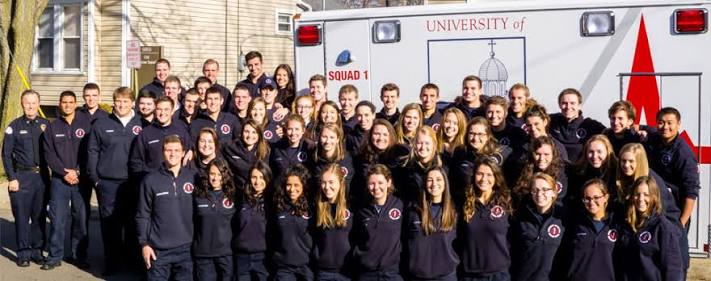
Rice University News
- Details
- Written by: Ian Feldman
- Category: Rice University News
- Published:
- Hits: 0 4134
by Mónica Rojas | February 7, 2016
Keeping to the beat of "Stayin' Alive," nearly 550 people across Houston learned life-saving CPR techniques at a statewide event Saturday.
Houston was among 10 Texas cities, led by the Texas College of Emergency Physicians, to host events teaching residents how to perform CPR and maybe even break a Guinness World Record for most trainings in a day.
"If someone has an emergency, even if emergency services are called right away, it's still going to take some time for them to get there," said Lisa Basgall, emergency medical services director at Rice University, which hosted one of the events. "If you know CPR, if we all know CPR, then the person has a much better chance."
Saving a life
Participants of "Texas Two Step: How to Save a Life" learned how to perform hands-only CPR in 20 minutes at 12 locations in the greater Houston area.
"Some people are intimidated that they might not do it right - they don't really know about providing rescue breaths," said Ndidi Okeke, a third-year Baylor College of Medicine student and coordinator for the Rice University and Sharpstown High School locations. "If you tell them 'You just have to do the compressions,' people are a lot more willing to provide CPR."
Rescue breathes aren't as vital to CPR as people believe, Okeke said. According to 2010 study in the Journal of the American Medical Association, hands-only CPR saves more lives than traditional CPR with intermittent mouth-to-mouth resuscitation.
Like its name suggests, the program teaches two main steps to help someone who is going into cardiac arrest: call 9-1-1 and begin chest compressions.
"Even a child can do CPR on an adult - they just have to put all their weight into it," Okeke said.
CPR alone cannot keep a patient alive but fills in the gap while professional medical attention is received, said cardiologist Tomas Garcia, president of the Texas Medical Association president.
Aout 80 percent of cardiac arrests happen in homes, according to the American Heart Association.
"Most of the time you'll save someone you love, someone in your family, someone in the work place, who suddenly collapses and it's just like a riding a bike, that training clicks in," Garcia said.
West University resident Anne Cleary took her 10-year-old daughter Kristen to Rice for one of the sessions.
"She's around teachers and her grandmother," Cleary said. "If she sees someone in need, (she'll) know what to do. I think it's a great event because in a very short amount of time you're going to learn a very critical skill."
A coordinated effort
Participants were asked to take a test before and after the training sessions to evaluate CPR knowledge. Angela Fisher, founder and chief executive office of leadership consulting firm MaveRx, said the tests will be used to contact participants three, six and 12 months after the sessions to assess how much of the training is remembered and used.
"It's amazing how coordinated effort can bring this together," said Arlo Weltge, medical director at American Medical Response. "The American Heart Association has for decades talked about the community as being the ultimate intensive care unit."
Whether Texas beat out Munster, Germany's 11,840 CPR participants for the Guinness world record won't be known until totals are tallied.
Article originally posted at http://www.houstonchronicle.com/news/houston-texas/houston/article/Rice-hosts-mass-CPR-training-6814320.php
- Details
- Written by: Scott Savett
- Category: Rice University News
- Published:
- Hits: 0 3460
Jeremy Huang / The Rice Thresher
After reviewing details over the summer, the Rice University Emergency Medical Services presented a revised version of legislation guaranteeing on-campus housing for In-Charges/In-Charge Trainees at the Student Association meeting on Sept. 3.
According to Baker College Senator Nitin Agrawal, he and former EMS Captain Patrick McCarthy initially proposed the legislation in April, but the SA rejected it due to concerns that EMS IC/ICTs might not be able to get housing in their own residential colleges.
"The main difference [between the new plan and the original] is the removal of the rotation system in which two IC/ICTs stay at their original college, and the other IC/ICTs from that college are assigned to the next available college," Agrawal said. "The problem was that college student bodies didn't want their residents to have to live at another college."
Since the SA tabled the original proposal last semester, two IC/ICTs are currently living off campus.
EMS captain Mollie Ahn reiterated the need for IC/ICTs to be constantly available on campus in order to maximize EMS's capacity to respond in an emergency.
"EMS can't reach a medical emergency from outside of Rice," Ahn, a Brown College senior, said. "EMS response time is usually around three to five minutes, while [the Houston Fire Department] response time is around 15 minutes."
Ahn said, since the nature of IC/ICT involves a large time commitment, having fellow IC/ICTs present on campus is necessary for the delegation of duties.
"For six to seven times a month, IC/ICTs have to be available 24 hours, from noon to noon," Ahn said. "[But they also have a] functionary role; IC/ICTs usually spend around 25 to 27 hours a week maintaining equipment and EMS education classes. If we get a call, all of the available IC/ICTs may already be [involved with] another medical emergency, so we need IC/ICTs to be able to pass the job to each other."
According to Agrawal, the legislation would also serve to provide a more unified housing system for IC/ICTs, as not all of the residential colleges have had a history of housing IC/ICTs.
"In the past, each residential college had their own system in dealing with IC/ICT housing," Agrawal said. "Some colleges did not have a policy, while the policies of those that did were varied. This legislation creates a unified policy that allows everyone to be on the same page."
Agrawal said the legislation would not impact or take away others' ability to obtain on-campus housing.
"The guaranteed housing works in the same manner by which members of the college cabinet receive guaranteed housing," Agrawal said. "Rice EMS will notify each respective college early enough so that proper accommodations can be made."
Agrawal said the SA will make its decision on implementing the legislation on Sept. 17 and that the proposal in its current form will likely receive agreement this time.
"There hasn't really been any pushback," Agrawal said. "We will likely have the on-campus housing next school year."
- Details
- Written by: Scott Savett
- Category: Rice University News
- Published:
- Hits: 0 4236
Impact Volunteer Service of the Year: Rice University Emergency Medical Services, Houston, TX. Award sponsored by Impact Instrumentation, Inc.
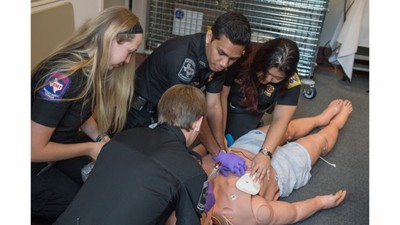
College campuses are interesting places to practice EMS.
Much like in a small community, campus EMS providers often know their patients. But these EMS providers aren't just their neighbors—they're also their classmates, teammates and friends.
Rice University Emergency Medical Services (REMS) serves an urban campus set on 300 acres in Houston, TX, across the street from the world's largest medical center. Total undergraduate enrollment at Rice University is about 4,000, with an additional graduate student population of more than 2,500.
Since 1996, Rice EMS has operated as an advanced life support first responder organization with a staff of 53 undergraduate volunteers, 20 alumni members, six volunteer physicians and one staff person.
"For an undergraduate student, being involved in a collegiate EMS agency as a young person is a tangible way they can participate in service to the university community, while learning and applying skills of working with a team, the challenges of caring for peers and balancing volunteering with their rigorous academic loads—skills that help build them into community leaders no matter what their majors or future educational plans," says Lisa Basgall, EMS director for REMS. And, she notes, the volunteers become a tight-knit family.
"Rice EMS has a team of six physician medical directors, five of whom are graduates of Rice EMS who returned to provide medical leadership and mentoring to the undergraduates currently participating in the program," explains Basgall. "This is an invaluable resource for our service. The physicians all assist with providing online medical command, and each helps in additional ways. Two physicians are involved with supervising the students in the research course; one assists with EMT and AEMT class instruction; one regularly comes to campus to help with continuing education for the ongoing staff; one oversees quality assurance and chart review for the service. All of these amazing physicians work with students in the program when they come to the ER for clinical rotations through the EMS courses. The student leadership team all participate in ongoing clinical rotations at the ER, taking a shift at least once a month to keep clinical skills sharp."
And those skills are definitely put to the test. In the 2013–14 academic year, REMS responded to 590 campus emergencies, provided 1,968 hours of special event coverage at 170 events, offered 39 CPR classes to almost 500 people—at no charge—and offered three EMS certification courses.
Continuing education is a vital component of all EMS services, but for REMS, being set on a college campus provides ample opportunities for ongoing educational opportunities.
"Rice EMS offers EMT and Advanced EMT certification courses annually," says Basgall. "These are offered as undergraduate science elective courses at the university. All courses are run in compliance with Texas Department of State Health Services standards, and Rice EMS is recognized by DSHS as an agency allowed to offer advanced life support certification courses. Offering the AEMT course as a hybrid course has ensured the undergraduates enrolled in the course are able to fit more than 130 hours of clinical rotations into the semester concurrent with the didactic portion of the course. The robust clinical rotations allow for increased competency in patient care upon completion of the certification, and better prepared providers for service within Rice EMS."
According to Basgall, this year REMS also offered an undergraduate EMS research course, partnering students with physician faculty from Baylor College of Medicine to participate in prehospital and emergency medicine research. The projects the students were involved with helped increase the students' insight into the process of evidence-based medicine and protocol development, and allowed for greater collaboration between the EMS service and the faculty physicians at the EMS agencies where they serve, as well as in hospital.
"The research course was a big step for EMS to take," Basgall says. "Many people enter college hoping to attend medical school in the future, but participating in prehospital and/or emergency medicine research as an undergraduate is an opportunity we hope will help our service—and others—in the understanding and development of evidence-based protocols for the future."
Because of frequent turnover in the student population, REMS has had to get creative in order to stay consistent in its level of service. "The need for consistency in training, efficiently welcoming and orienting new members, and thorough record keeping, is essential for any collegiate EMS agency where the most experienced and proficient staff graduate and leave annually," Basgall explains. "Rice EMS has worked to meet these challenges through working with the university's Information Technology Department, developing shared storage options that allow student administrators to collect and store job descriptions, training manuals, resources, and other key information to pass on to the next student who takes on leadership positions in the same functional area in the future. Implementing electronic medical records has increased exponentially the access the medical director team has to patient care records, and allows them to give prompt feedback to the EMS providers. While these steps may seem elementary, they have made a large impact in our organization in reducing the need to design a training program, or make public education materials, for instance, allowing more time for the personal connections involved in the ongoing recruitment and training of new members essential for collegiate EMS agencies to flourish."
And the campus setting is beneficial in a number of other ways. Basgall says REMS works in collaboration with personnel from the university's Environmental Health & Safety Department when responding to all calls involving lab accidents. And its unique access to other departments makes for some excellent partnerships. The Rice Counseling Center provides a program on QPR—Question, Persuade and Refer—a suicide-prevention program for all EMT students. Leaders from the counseling and well-being offices are also willing and able to provide drop-in times for EMS staff who have been on a high-stress call.
"Amazingly, this service is run by young adults—college students who join together to maintain the proud history of the service, and help it grow for the future," Basgall says. "Collegiate EMS is a unique niche in the EMS community, but provides unparalleled opportunities for new EMS volunteers to attain proficiency as care providers and learn what it means to be a community volunteer and leader."
Note: This is an excerpt from a larger article featured on EMS World.
- Details
- Written by: Ian Feldman
- Category: Rice University News
- Published:
- Hits: 0 4325
NEWS RELEASE
September 16, 2014
FOR IMMEDIATE RELEASE
2014 National EMS Award Recipients Announced
Clinton, Miss. — The National Association of Emergency Medical Technicians and EMS World announced the recipients of the 2014 National EMS Awards of Excellence. We congratulate the following recipients and recognize their outstanding achievements and contributions in EMS:
Susan Bailey, NREMT-P, Denham Springs, Louisiana
2014 NAEMT/Nasco Paramedic of the Year Award, sponsored by Nasco
Brandon Pruitt, EMT, Searcy, Arkansas
2014 NAEMT/Braun Industries EMT of the Year Award, sponsored by Braun Industries
Melissa Doak, NREMT-P, Williamsburg, Virginia
2014 NAEMT/Jones & Bartlett Learning Educator of the Year Award, sponsored by Jones & Bartlett Learning
Rice University Emergency Medical Services, Houston, Texas
2014 Impact Volunteer EMS Service of the Year, sponsored by Impact Instrumentation, Inc.
Christian Hospital Emergency Medical Services (CHEMS), St. Louis, Missouri
2014 Dick Ferneau Paid EMS Service of the Year, sponsored by Ferno
Susan Bailey began her career as an EMT in rural Louisiana, also volunteering as a CPR and First Responder instructor until receiving her Paramedic certification and later, Bachelor’s degree (Magna Cum Laude). She worked as a National Registry examiner and was elected to the Louisiana Association of Nationally Registered EMT (LANREMT) Board of Directors. Bailey held positions at East Baton Rouge Parish EMS, earning recognition for educating instructors; bringing pediatric and geriatric education to the state; and hosting at least 20 visiting field interns in her home. Chair of LANREMT’s Educational Conference, Bailey also serves as the LANREMT representative on the NAEMT Affiliate Advisory Council and as the NAEMT State Advocacy Coordinator for Louisiana. "Susan works tirelessly to promote the EMS profession," said LANREMT President Evon Smith, NRP. "She does not ask for money when students stay at her house for weeks at a time, is not compensated for work as the conference chair or legislative liaison. She does all of these things because she loves being a Paramedic and loves the EMS Profession."
Brandon Pruitt has been an EMT with NorthStar EMS in Searcy, Ark., since 2007. He oversees the agency’s Field Training Officer program, supports hazmat efforts, and attends local emergency planning committee meetings. In addition to teaching CPR and First Responder classes, Pruitt is an honor guard and has worked as a hospital Emergency Department technician. Jeffery Steele, M.D. worked with Pruitt at White County Medical Center and commented, "I have never had cause to question Mr. Pruitt's clinical knowledge, judgment or skills… I have worked with him extensively, and I have been impressed with him professionally. Perhaps more importantly, however, is this: Brandon is a good person. He treats his job as a calling." Pruitt is also involved in several community projects that raise awareness and support for charities. He was nominated "without hesitation," said Tonia Hale, NorthStar director of operations. "I believe there is more to being a good EMT than just skills; you also have to give back to communities that you serve."
Melissa Doak is a dedicated EMS instructor, mentor and avid researcher. Her 30-year career began as an EMT, then a Paramedic. Known for her innovation, Doak is an educator at York County Department of Fire and Life Safety, in Yorktown, Va. She teaches NAEMT’s EMS Safety course and promotes EMS practitioner safety. She has presented training at EMS conferences around the
country; contributed content for the National Registry Intermediate Test; and assisted in the development of training materials used around the world. She serves on several committees, including the State of Virginia Office of EMS Symposium Committee, and Protocols, Policies and Procedures Committee of the Peninsulas Emergency Medical Services Council, and has been involved with several projects and organizations. Robert Ditch, EdD, recipient of last year’s educator award said, "Melissa Doak is the finest EMS educator that I have witnessed in my more than 40 years in EMS and 30 years as an EMS instructor and professor; having attended her classes as a student and also witnessing her dynamic instructional skills as an academic peer."
Nominees for the Paramedic and EMT of the Year Awards are scored on how the nominee: provides superior patient care; is an effective advocate for patients and their families; works with peers to foster a positive work environment; demonstrates professionalism in interacting with patients, their families and other medical professionals; and demonstrates a commitment to continuing professional education.
Nominations for the Educator of the Year Award are scored on how the nominee: consistently demonstrates commitment to providing high quality, professional education for EMS practitioners; serves as an outstanding role model for EMS practitioners in the classroom and in the community; effectively mentors EMS students at all stages of their professional development; introduces and incorporates innovative approaches and tools in the classroom, which enhance students' learning experiences; and contributes and participates in the development of education content that expands the body of quality EMS curriculum.
Rice University Emergency Medical Services is an advanced life support first responder organization, serving Rice University since 1996. Staff includes 53 undergraduate volunteers, 20 alumni, 6 volunteer physicians, and 1 staff. In the 2013–14 academic year, Rice EMS responded to 590 campus emergencies; provided 1,968 hours of special event coverage; and offered 39 CPR classes to nearly 500 people, and held 3 EMS certification courses. Their EMS research course awarded more than 1,200 continuing education hours. Rice EMS helps raise awareness of local health resources, and provides information on medical conditions and emergency services. Rice EMS provides all CPR and First Aid classes on campus, and maintains a Public Access Defibrillator (PAD) program, run by students who want to maintain the history of the service and help it grow.
Christian Hospital Emergency Medical Services (CHEMS) provides 911 and inter-facility patient transport to the St. Louis area, serving more than 250,000 people and responding to approximately 25,000 calls annually. Its fleet consists of 16 ambulances and two command/triage vehicles staffed by 60 full-time first responders and 40 on-call responders, and seven full-time dispatchers. CHEMS takes a proactive approach to continuing education, offering an array of opportunities for providers to further their education and enhance experience. CHEMS has advanced hospital-based mobile integrated healthcare (MIH) in the community, decreasing emergency department admission of non-emergent patients by 11 percent, and assisting patients to find primary care physicians. In addition, CHEMS focuses public education efforts on teaching children about 911 and emergency situations through its "No Panic Please!" program.
Nominees for the Service of the Year Awards are scored on the following: advances in EMS education and training in the agency; innovations in prehospital care and protocol development implemented by the agency; medical community involvement with the agency; EMS system/program upgrades implemented by the agency; worker safety and well-being programs implemented by the agency; injury- and illness-prevention projects implemented by the agency; and public-education project sponsorships the agency is involved in.
- Details
- Written by: Scott Savett
- Category: Rice University News
- Published:
- Hits: 0 4257
A weeklong recognition of campus-based EMS
Adapted from ACEP's EMS Week 2014 Planning Guide (http://www.acep.org/emsweek/)
LAUREN CHAVIS, AN EMT and senior at Johns Hopkins University, volunteers 24 hours a week as EMS operations director for her campus EMS service, Hopkins Emergency Response Organization. Although she's thinking of going to law school, Chavis says working in EMS has given her experience in leadership and handling difficult situations she couldn't find anywhere else.
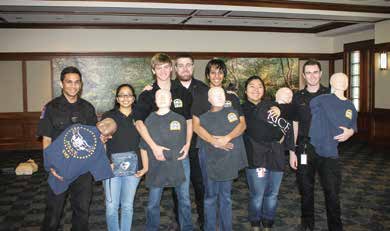
"In EMS, you can do good while at college, not in an abstract way, but in a very real way, where you're helping real people in real time," Chavis says.
She is one of hundreds of U.S. and Canadian college students who participated in 2013's Collegiate EMS Week, which is modeled after the national version of EMS Week, but is held during the second week of November to accommodate college schedules. (In May, many students are either taking final exams or on summer break.)
Sponsored by the National Collegiate EMS Foundation and the American College of Emergency Physicians, Collegiate EMS Week is endorsed by Congress. It is a week-long recognition of campus-based EMS — a time for those organizations to publicize their services and educate their communities. The week kicks off with National Collegiate CPR Day, which focuses on training fellow students and faculty in CPR. Other activities can include open houses, blood drives coordinated with local Red Cross chapters, local or campus media ride-alongs, joint training with other local EMS or fire agencies, and dorm safety events.
At Johns Hopkins, volunteers for the BLS ambulance service taught hands-only CPR to more than 50 people in the quad and created a hands-only CPR video that was shown on monitors in university buildings. Set to heart-thumping music and depicting the sudden collapse of a young male student, the video has received more than 700 views on YouTube.
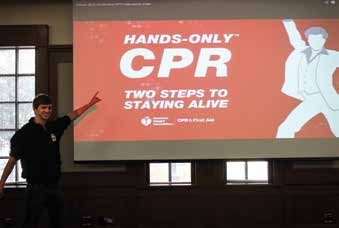 In Houston volunteers for Rice University EMS offered free blood pressure checks, taught hands-only CPR in the quad and held a special AED and CPR training session for the employees in a campus building where a woman had recently died from sudden cardiac arrest.
"Celebrating Collegiate EMS Week lets the members in the organization know how much they do and how appreciated they are," says Patrick McCarthy, an EMT majoring in biochemistry and cell biology and captain of a team of 70 campus EMTs who answered about 750 calls for service last year. "It also raises general awareness among the student body, the faculty and the community about our capabilities, how much time we put in and how dedicated the personnel in the organization are."
The National Collegiate EMS Foundation was founded at Georgetown University in 1993, when the Internet made it easier for campus rescue squads from around the country to connect with one another about ideas and challenges. Since then, the organization has grown to include nearly 250 campus EMS groups in 41 U.S. states and four Canadian provinces, collectively handling more than 90,000 responses annually. Their annual conference draws nearly 1,000 students, for lectures, skills labs and roundtable discussions.
"When the foundation started in 1993, the EMS community in general did not look favorably on campus EMS. The initial impression was, 'What are these kids doing playing around?'" says Joshua Marks, M.D., a member of the National Collegiate EMS Foundation's board of directors and a trauma and surgical care fellow at University of Pennsylvania in Philadelphia. "That has changed completely. Today, everyone in EMS recognizes that these college kids are energized, interested in learning and in that group are the future leaders of EMS."
While some of the students involved in campus EMS go on to careers in EMS or other health fields, many don't, he says. But they retain a lifelong appreciation for what EMS is and what it has to offer. "Collegiate EMS is a unique opportunity for college kids," he says. "It's students helping students, acquiring life skills of leadership, decision-making, problem-solving and teamwork."
Check out the Hopkins Emergency Response Organization video at facebook.com/photo.php?v=10201843550724216